From Cultural Storytelling to Design Leadership: Renata Dias, Graphic Designer at the National Museum of Ireland
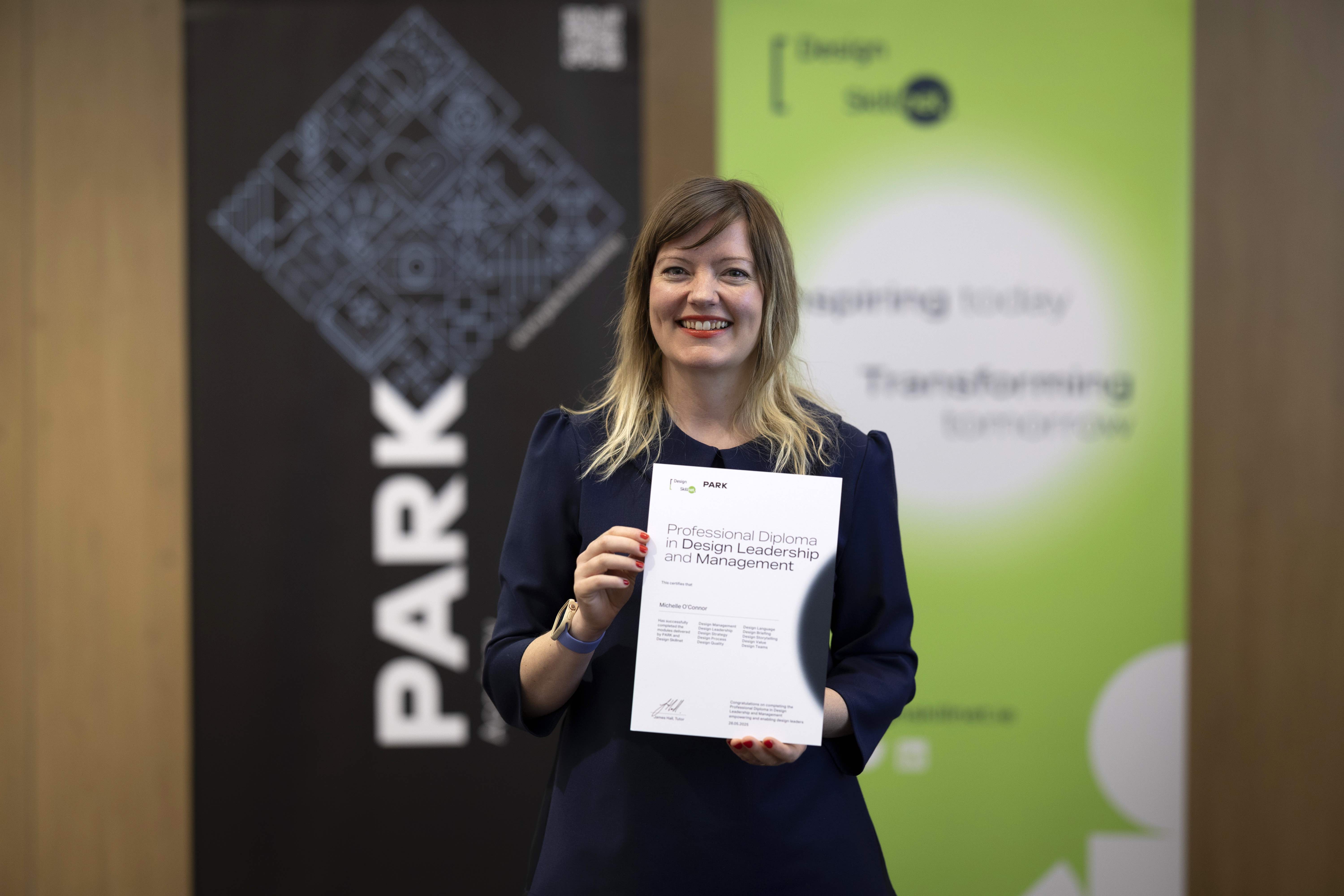
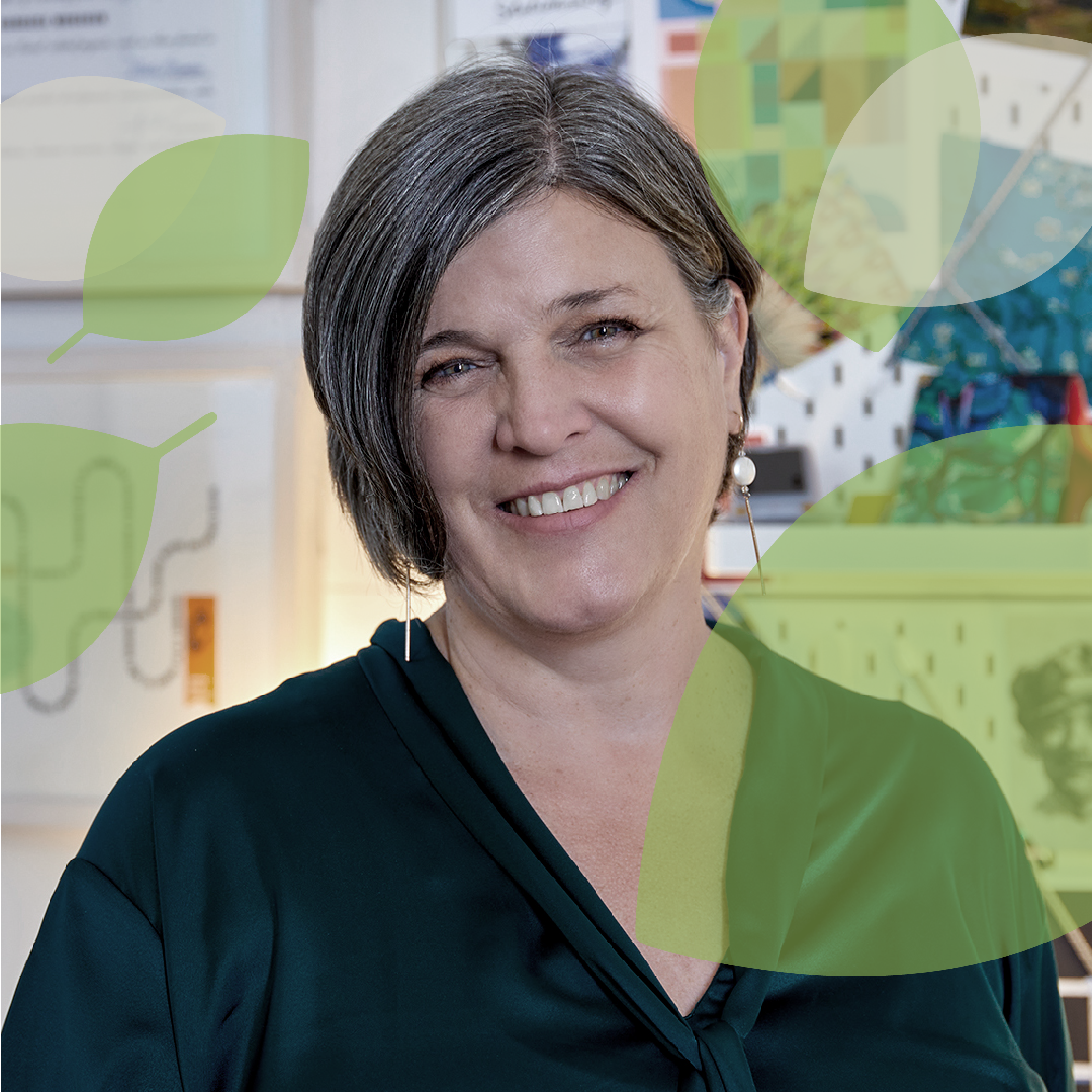
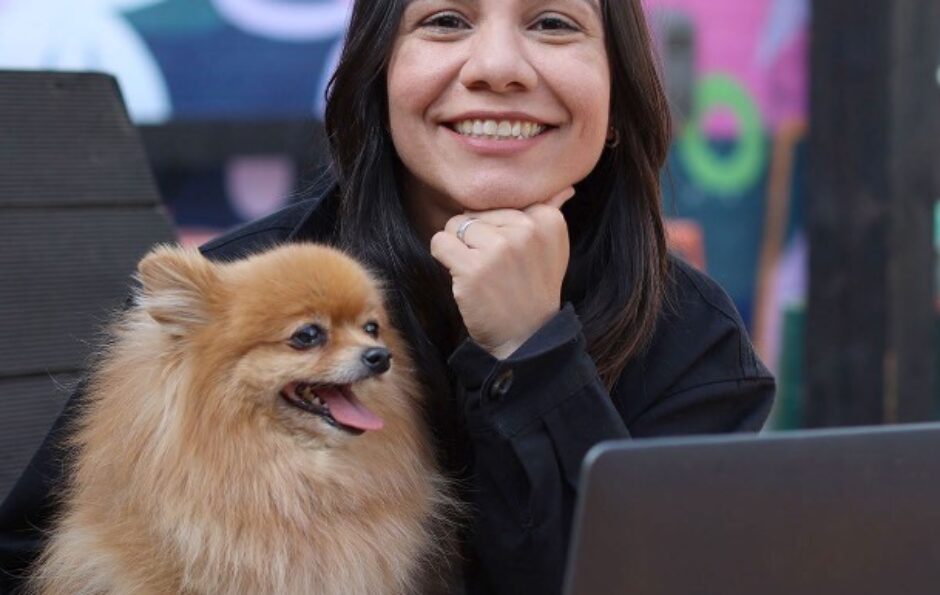
Wondering if the programme is for you? Meet Renata Dias one of the latest graduates! As a designer at the National Museum of Ireland, she creates engaging visual communications across exhibitions, publications and interactive experiences. But to grow her influence and leadership capacity, Renata decided to invest in herself through the Professional Diploma in Design Leadership and Management.
Read about her career journey, day-to-day role at the museum, her thoughts on leadership and her experience on the programme and how it has benefitted her career and current role.
- Tell us a bit about your career as a designer – what led you to your current role and what’s your day-today like?
I’m a graphic designer originally from the Amazon region in Brazil. My career started in the corporate world, working in communications within a finance environment. But everything shifted when I moved to Dublin and began working in a cultural setting. That’s when I truly found my place. Today, I work at the National Museum of Ireland, where I focus on creating clear and engaging visual communication across a variety of projects. It’s a role that allows me to combine design with culture, history and storytelling in a way that makes a real difference in the community, which I find incredibly fulfilling.
My role is quite dynamic and executive in nature. I might begin by developing concepts for an exhibition, then move on to creating adverts for magazines, designing visuals for an application, or creating interactive booklets for children. I also work on publications, which I love. One of my favourite projects this year was designing the catalogue for Words on the Wave, a once-in-a-lifetime exhibition currently on display at Kildare Street until 24th October. If you haven’t seen it yet, I highly recommend a visit.
- Why did you feel it the right time to invest in leadership skills and what gap were you hoping to close?
I joined the Diploma after around ten months working at the Museum, and it felt like the right moment to pause and look at things from a broader perspective. At the Museum, we often manage large and complex projects that involve many different people, and I realised I needed to improve how I communicated and how I approached things strategically.
“The Diploma gave me confidence to turn what I thought was a weakness into a strength.”
Because I’m not a native English speaker, even simple things like small talk before a meeting can be quite tricky. I knew I needed to build more confidence, especially when speaking in public. Presenting projects during the Diploma was a real challenge, but it also became a turning point for me. I was worried about whether people would understand my pronunciation or my accent, so I put a lot of effort into preparing my scripts and crafting the storytelling. To my surprise, people often came up to me afterwards and said things like, ‘I really liked your presentation style.’ That meant a lot. What I had seen as a weakness turned out to be something valuable, and that really helped me feel more confident.
- How does Design and the work you do bring value to the organisation and what is the growth potential after you have completed the course?
Design helps bring stories to life in the Museum. It’s in the way objects are presented, how spaces feel, and how people connect with what they see. And design is everywhere in the Museum. Artefacts like the mether, designed to be shared in ceremonies, or Eileen Gray’s Non Conformist Chair, which challenges conventions, show how design carries meaning. These are, in many ways, design stories.
After the course, my purpose at the Museum became clearer: to reach more people through thoughtful, engaging design that creates a memorable experience. Design is used not just to make things look beautiful, but to make them clearer, more welcoming and more inclusive.
- How did the Diploma change the way you approach your role? Do you see a shift in your professional presence and the way you lead?
“Leadership doesn’t come from a title — it’s about presence, curiosity and supporting others.”
Definitely one of the biggest takeaways was understanding that leadership doesn’t come from having a formal title. It’s about presence, curiosity and how you support others. I’ve noticed a shift in how I approach problems. Rather than jumping straight to solutions, I take time to listen, ask questions and understand the problem fully. I’m more focused on improving not just the final outcome, but also the process and the experience of the people involved.
- In a public/cultural setting, budgets and stakeholders can be complex — how did the diploma provided tools and strategy to help you navigate that?
It’s true — working in a cultural institution often means dealing with limited budgets and a wide range of stakeholders. The Diploma gave me a new lens to approach design in terms of process, language, quality and value. When you understand those pillars, you can adapt to any budget and still deliver meaningful work. It’s about building trust and making it easier to work together.
- When you did the programme a new feature had been introduced – the cohort chose between 2 potential elective routes. The route your cohort chose was Design Value – Design Story Telling – Design Teams – why did you think it was important to focus on these three modules?
It just clicked with what I was really looking for. I wanted to learn how to give the design studio more visibility and show its value more clearly within the Museum. Storytelling was a big part of that because I knew I needed to improve how I communicate ideas. Studying Design Teams also helped me understand my own environment better and how we can make better use of our skills and collaboration.
- What was it like to learn with the other designers? How valuable was the peer network and community?
“The community of peers was one of the most valuable aspects of the experience.”
One of the best parts of the course was the group itself. On the final day, we all said, ‘I’m going to miss this group.’ Sharing experiences with other designers was incredibly rewarding. Sometimes you’re so immersed in your own environment that you forget others are facing similar issues. Hearing how they approach things was really insightful.
- Who would you recommend the Professional Diploma in Design Leadership and Management to? And Why?
“It’s rare to find a leadership programme that speaks the language of design.”
Absolutely. It’s rare to find a leadership and management course tailored specifically for designers. Most programmes are generic, but this one speaks our language. It helps you gain confidence, understand the strategic value of design, and connect with other design leaders. The structure is clear and practical, and the one-on-one coaching sessions are a real highlight. I’d recommend it to any designer who’s ready to take the next step.
Find out more about the Professional Diploma in Design Leadership and Management.
Find out how Design Skillnet can help you become more creative, human-centred, and impactful within your organisation.